 Liquid bulk
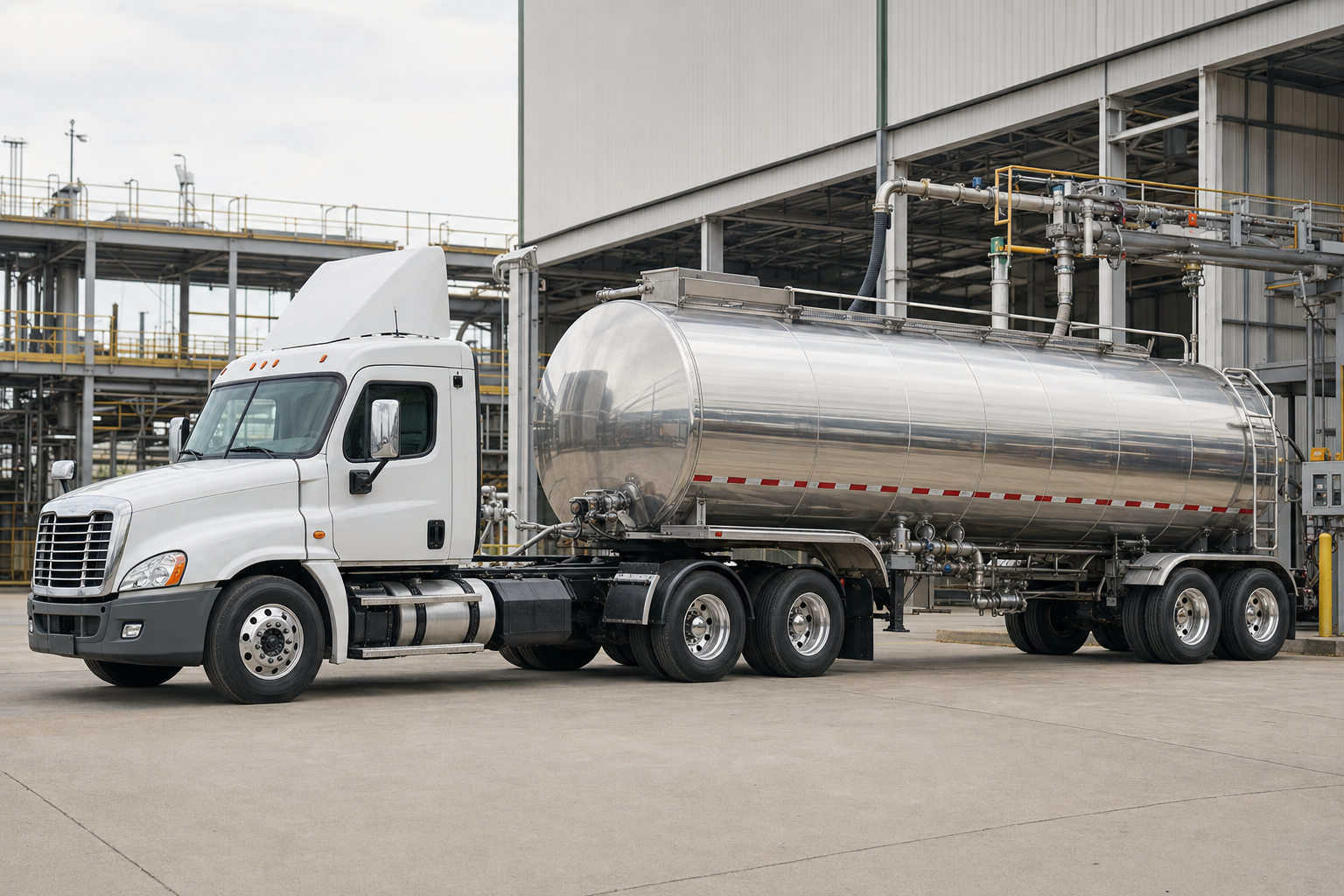
Stainless Steel Tanker
Commonly used for
Food-Grade and Kosher-capable products, chemicals, oils, ingredients, and other specialty liquids.
Key capabilities & properties
- Corrosion-resistant stainless construction
- Smooth interior supports effective washout
- Common choice where product purity matters
Important: Product history, wash documentation, and compatibility still determine whether a particular trailer is appropriate.
 Liquid bulk
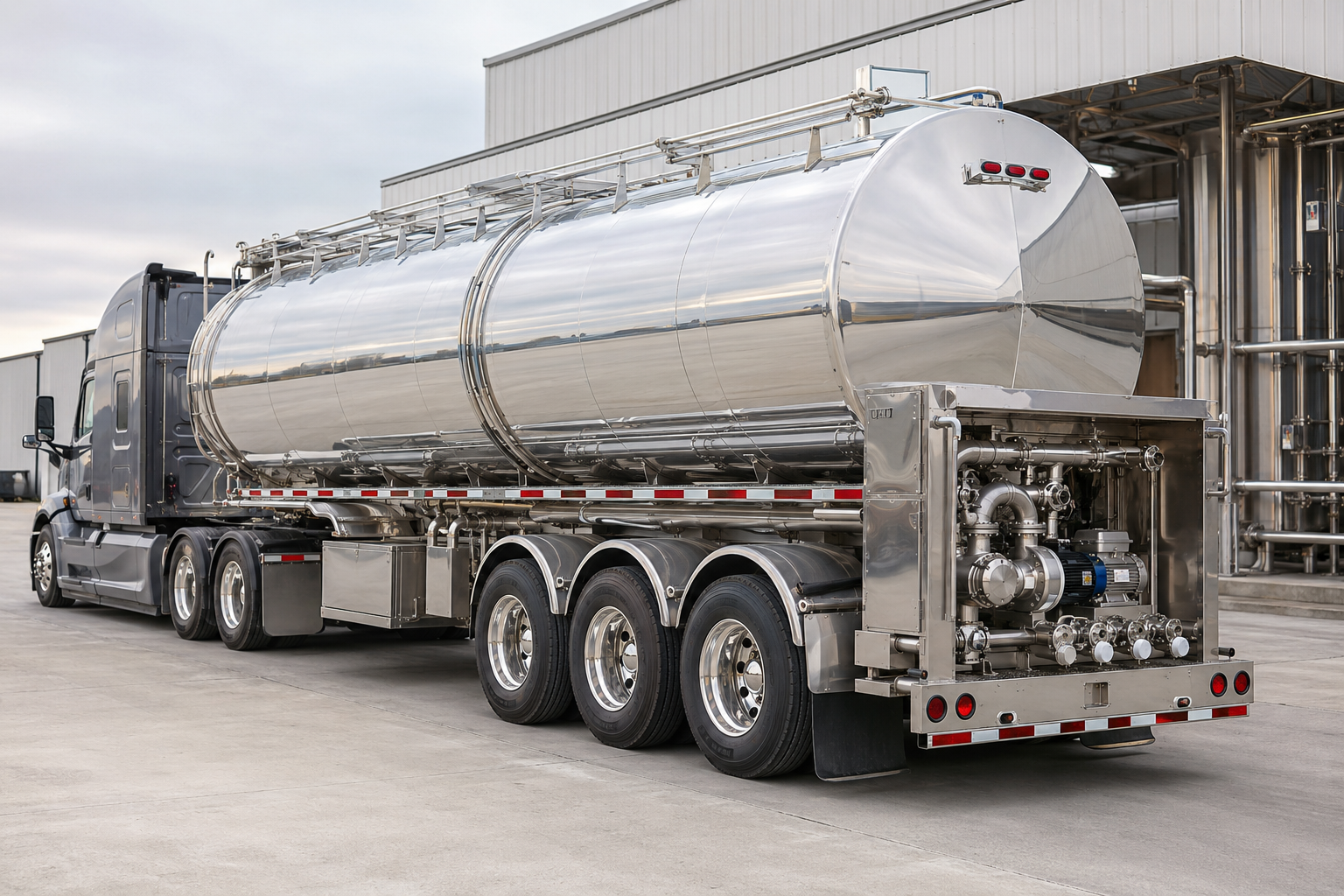
Food-Grade & Kosher-Capable Tanker
Commonly used for
Edible oils, sweeteners, food ingredients, and other products requiring sanitary handling, approved prior-product history, and documented wash procedures.
Key capabilities & properties
- Sanitary stainless product-contact surfaces
- Kosher-capable service requires appropriate documentation and compliance—not a different tank shape
- Onboard sanitary pumps can support facilities without their own unloading pump
- Food-Grade hoses, fittings, seals, and capped connections support Kosher requirements and protect product integrity
Important: Food-Grade, Kosher, and pump requirements must be requested before dispatch. The tank, previous loads, wash certificate, pump, hoses, and fittings all need to meet the customer’s product-specific standards.
 Liquid bulk
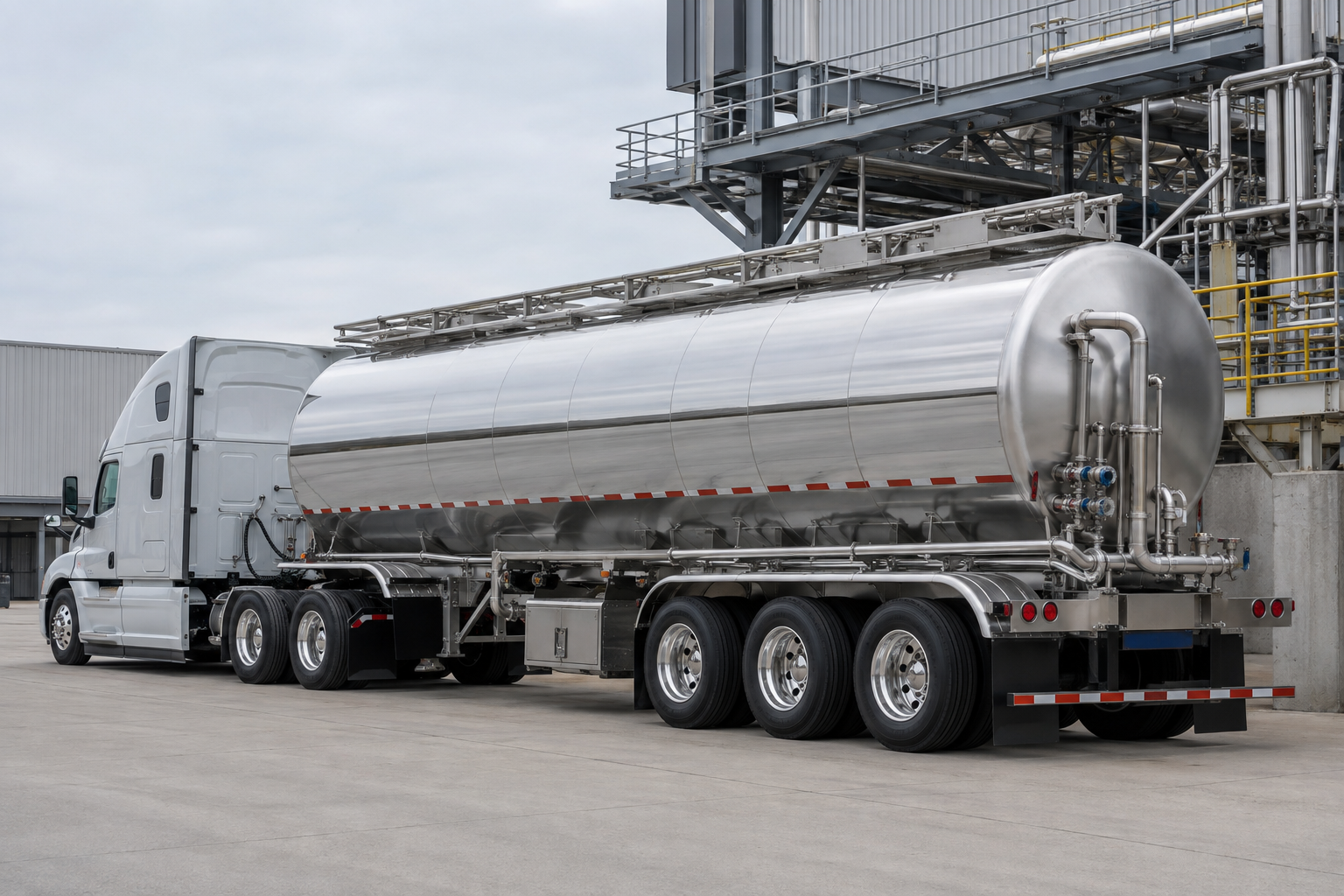
Insulated & Heated Tanker
Commonly used for
Liquids that must retain heat, remain pumpable, or avoid rapid temperature change in transit.
Key capabilities & properties
- Insulation slows temperature loss
- In-transit heat may maintain product temperature
- Steam coils may support unloading at the destination
Important: Heating equipment maintains heat; it is not always designed to raise a cold product to its required temperature.
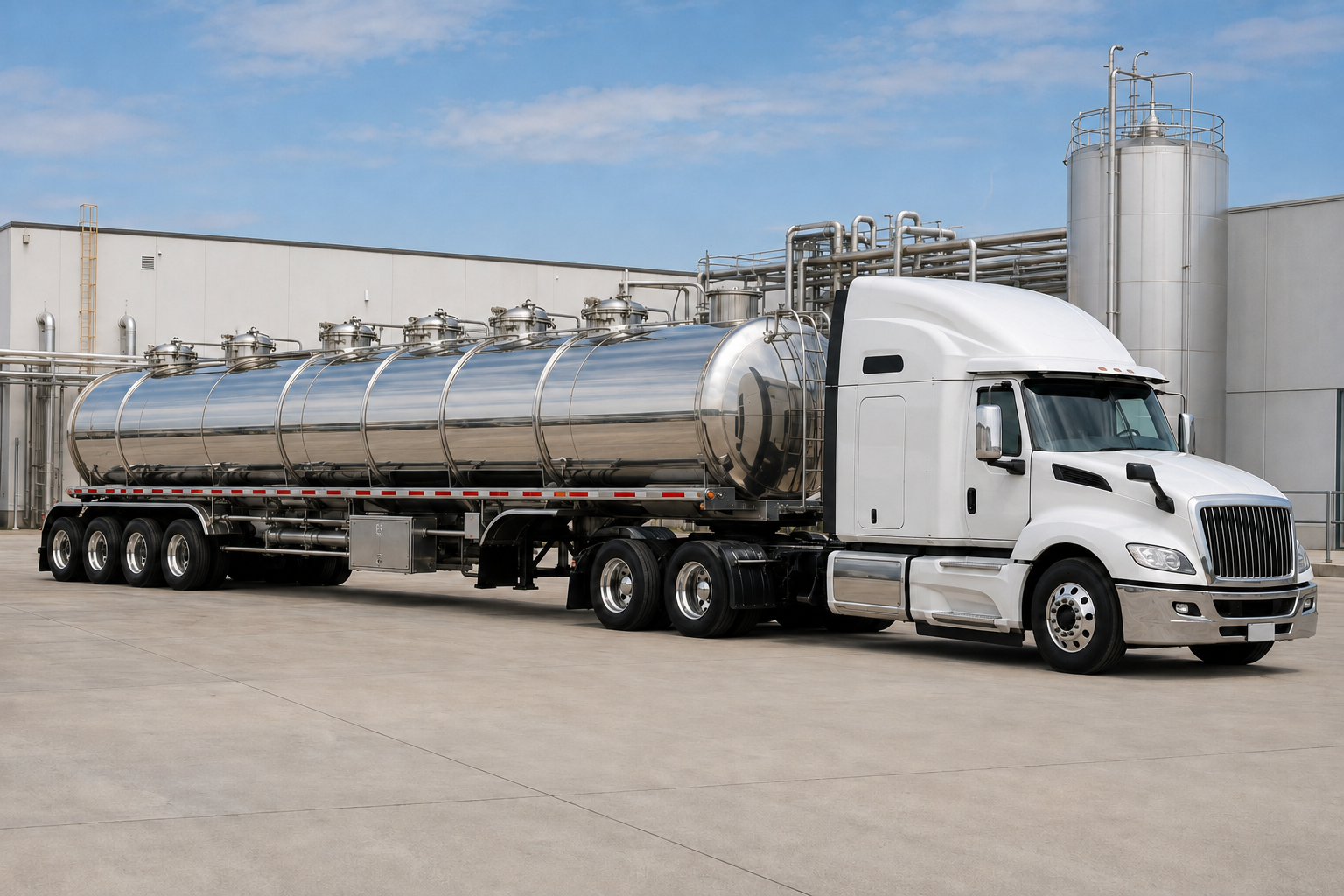 Liquid bulk
Compartment Tanker
Commonly used for
Separated quantities, multi-stop deliveries, or compatible products that cannot be combined in one tank.
Key capabilities & properties
- Internal bulkheads divide the tank
- Multiple manways identify separate compartments
- Can reduce the need for separate shipments
Important: Weight distribution and product compatibility must be evaluated for every compartment configuration.
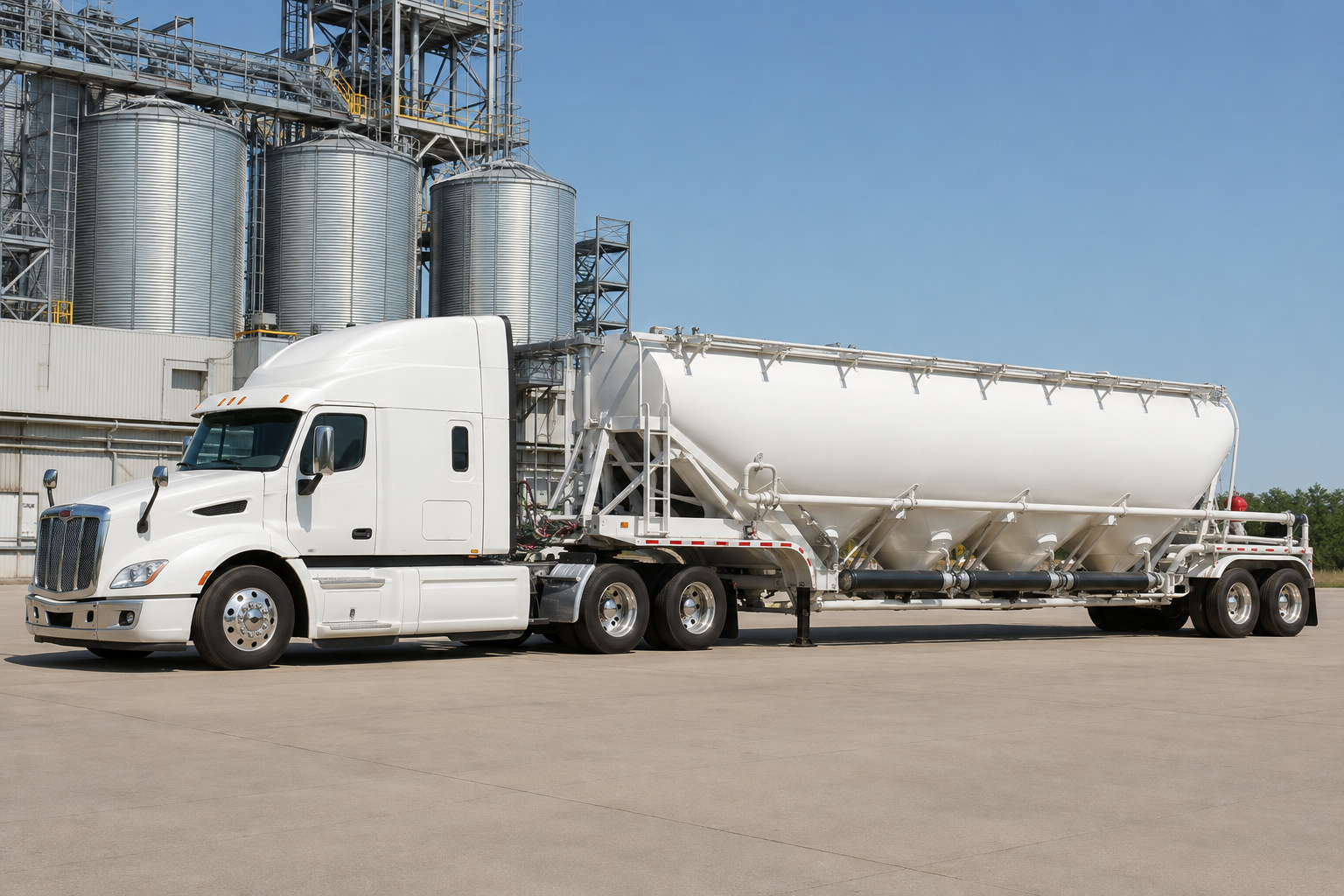 Dry bulk
Pneumatic Dry Bulk
Commonly used for
Powders and fine granular products such as cement, flour, plastic resin, lime, and compatible dry materials.
Key capabilities & properties
- Pressurized air moves product through hoses
- Cone-shaped hoppers direct material to outlets
- Requires compatible receiving equipment and venting
Important: Unloading speed depends on product density, hose length, air supply, and the receiving facility.
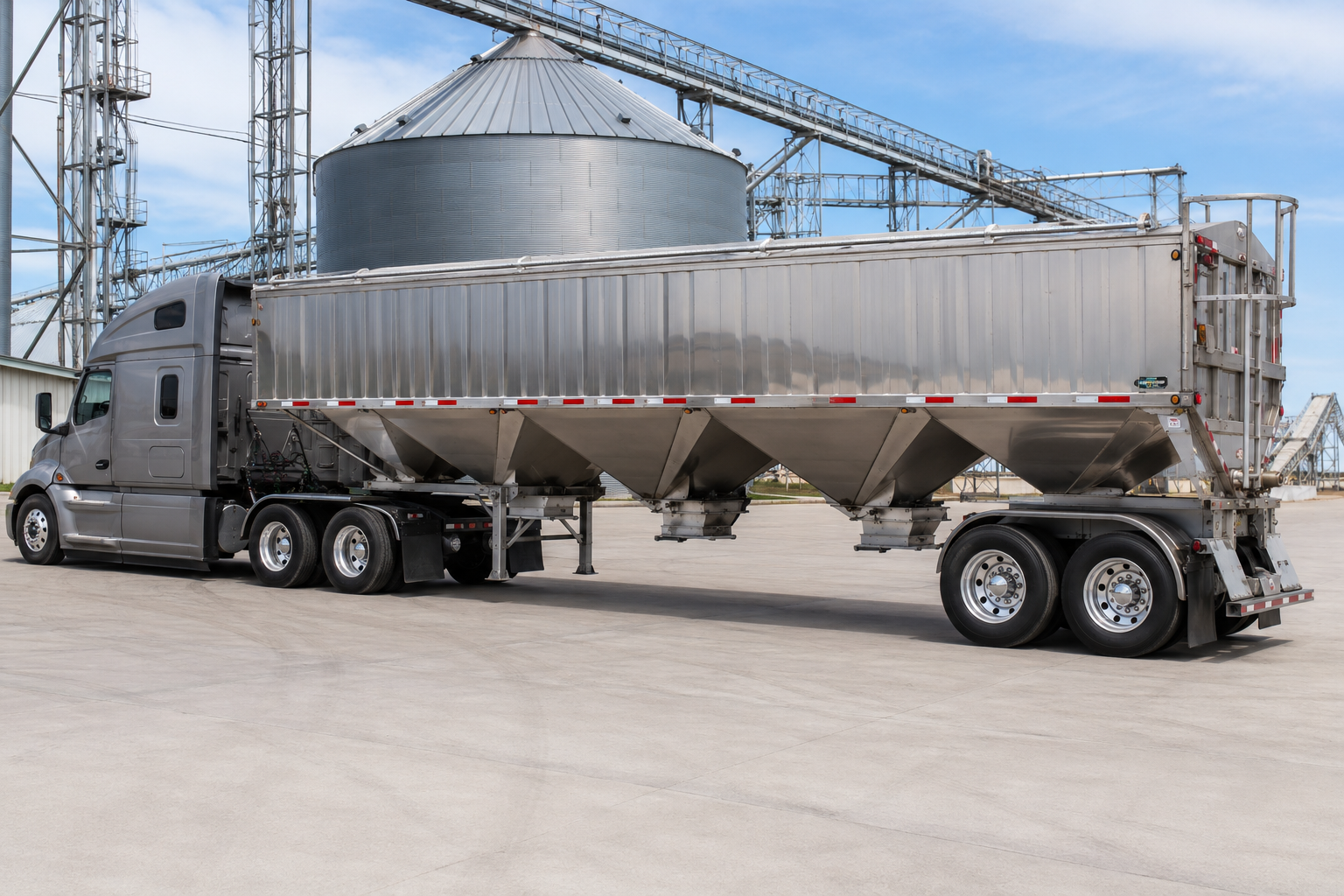 Dry bulk
Hopper Bottom
Commonly used for
Free-flowing agricultural and industrial commodities such as grain, feed ingredients, fertilizer, and pellets.
Key capabilities & properties
- Gravity discharge through bottom gates
- Fast loading through open top hatches
- Lightweight aluminum designs improve payload
Important: The receiving location needs suitable clearance, pits, augers, or conveyors for bottom discharge.
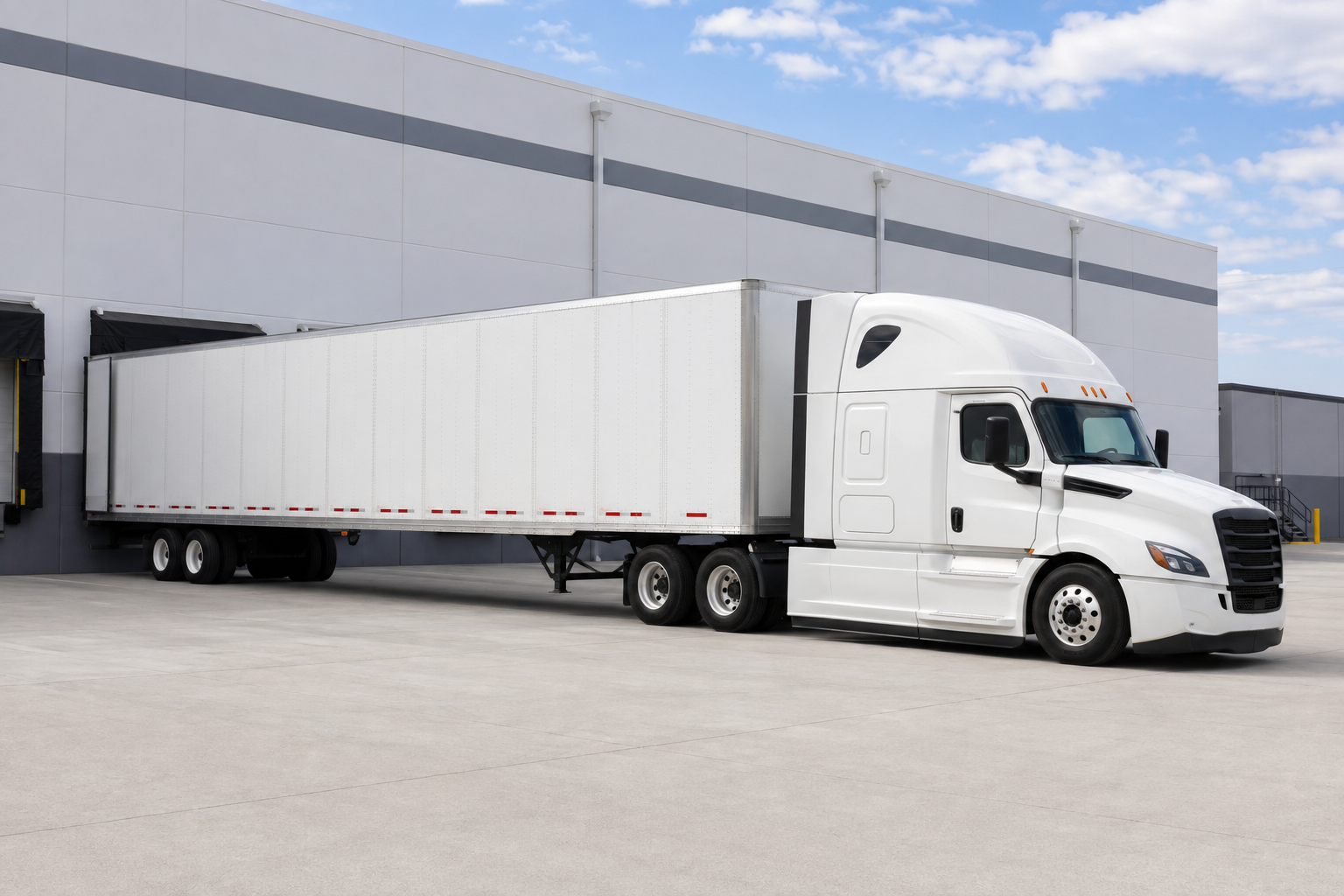 General freight
Dry Van
Commonly used for
Palletized freight, packaged ingredients, manufactured products, and goods needing enclosed protection.
Key capabilities & properties
- Fully enclosed from weather and road debris
- Loaded from rear doors or some dock systems
- Common 53-foot configuration
Important: Dry vans do not provide temperature control unless specialized equipment is added.
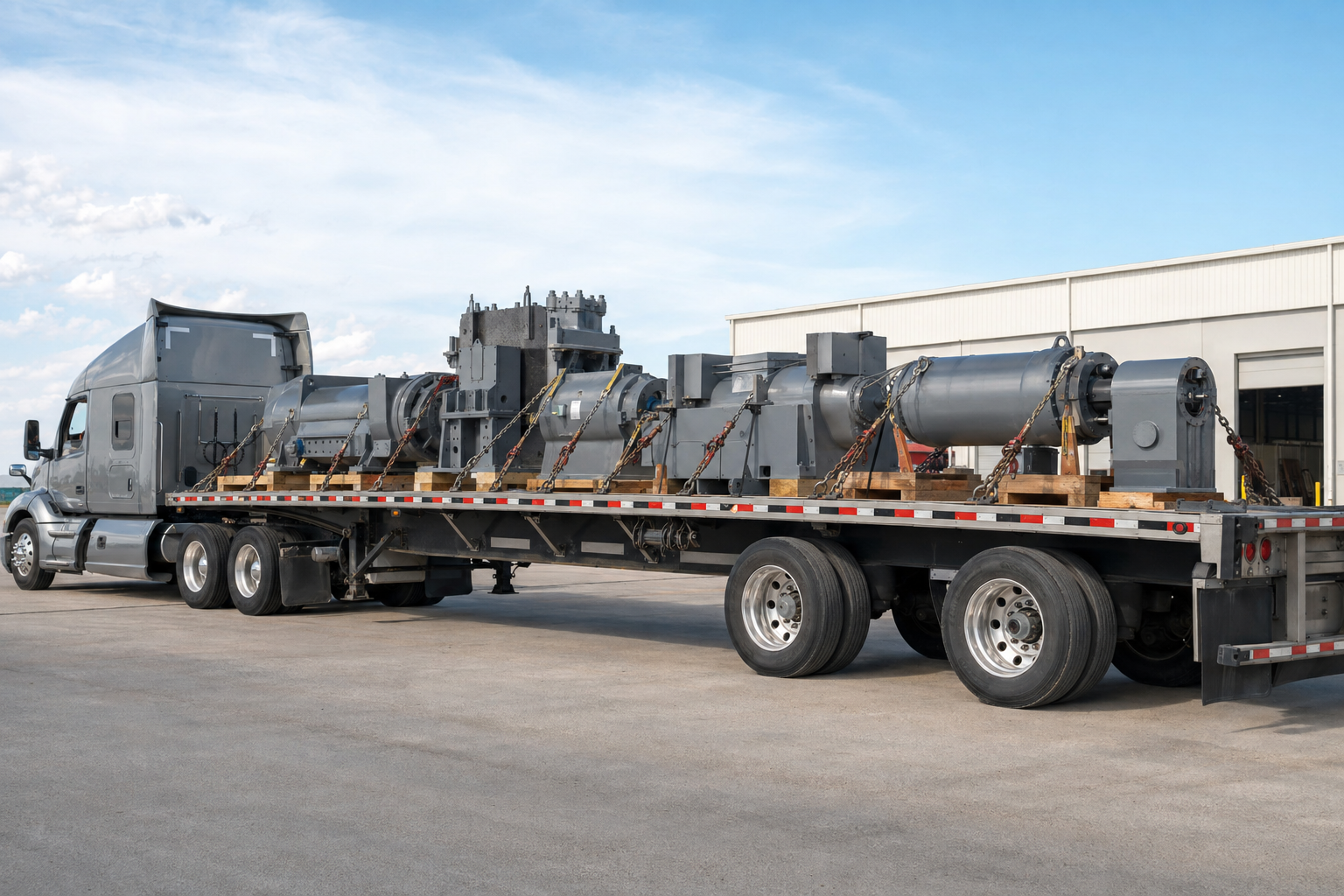 General freight
Flatbed
Commonly used for
Oversized, side-loaded, crane-loaded, construction, machinery, and industrial freight.
Key capabilities & properties
- Open deck permits top and side loading
- Tarps can provide limited weather protection
- Securement is specific to cargo size and weight
Important: Dimensions, weight, permits, tarping, and securement requirements should be confirmed before dispatch.
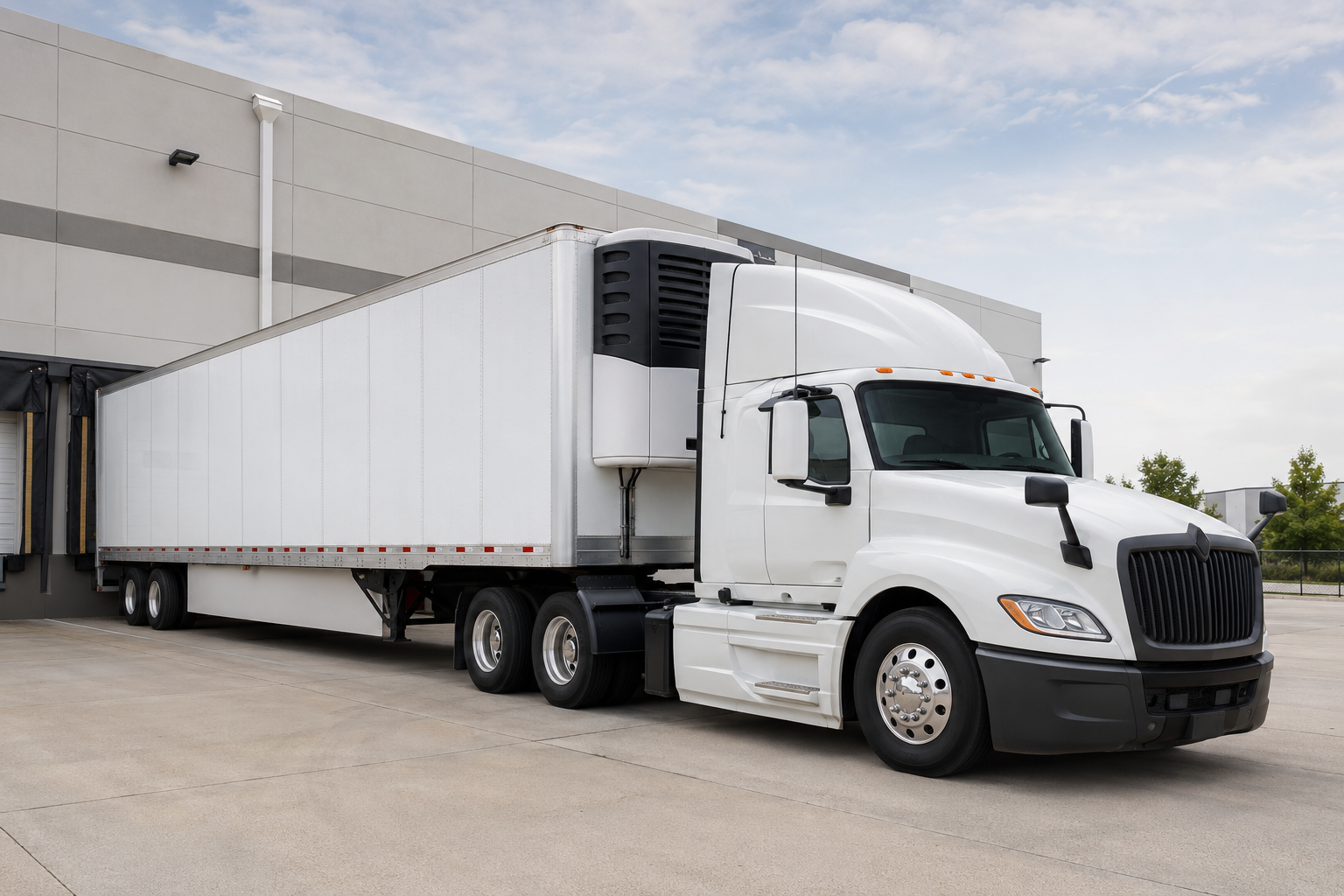 General freight
Refrigerated Trailer
Commonly used for
Temperature-sensitive packaged products requiring controlled conditions throughout transportation.
Key capabilities & properties
- Integrated refrigeration unit controls temperature
- Insulated walls reduce heat transfer
- Continuous or cycle operation depends on the product
Important: A reefer maintains temperature; it should not be assumed to rapidly cool product loaded above specification.